Eczema- a change in lifestyle

Many of you would have already read my last post recounting our nightmarish experience as parents where our daughter went through “severe neutropenia” as a result of “myelosuppression” (where her bone marrow had effectively shut down due to an immunosuppressant given to control her severe eczema). Yet, we have managed to pull through after a harrowing time earlier this year and since then things have come back to normal (well almost).I have mentioned briefly in my previous post about some of the measures I have taken at home and the changes in our lifestyle to ensure that no stone is unturned. I have been inspired by many parents who shared their experiences through their blogs, websites, forums, support groups and other social networks.

The first thing is that there might be no “one” particular thing or action that will help you to control your child’s eczema. It is usually a combination of things like regular moisturizing, topical application of steroidal creams, oral medications in severe cases and other such factors. But many parents have also been able to control their child’s eczema (or at least improve) through some lifestyle changes. I have done the same for my child and though in my daughter’s case her eczema is quite severe and is managed through medications, I never give up hope that these measures might be helping her in some way or the other. In any case, I am quite willing to make whatever changes that are required to be one step closer to help Aiyana lead a comfortable life and I am sure you will do the same for your child if required.

Some steps I have taken

1. I changed the laundry and dishwashing detergent for the entire household since that was the first thing most parents mentioned as a key trigger for flare up for eczema in many cases. Infact, last year, when Aiyana developed Erythroderma was the time when I changed the way we do our laundry. It was definitely difficult in the beginning to completely redo the way we do our laundry. I had to find out about product availability in India, their suitability to our climatic and water conditions and train my help to use these products. But through trial and error I have managed this effectively and for the past one year now I have completely eliminated synthetic detergents from my household and use only natural products to do the same.

I wanted to find a natural cleanser free of most chemicals (especially SLS and SLES) and came across our very own traditional “reetha” used by our previous generations for laundry as well as bathing purposes. Luckily for me, soap nut (or reetha as it is called in hindi) is produced primarily in India and Nepal. The fruit contains saponins which is a natural surfactants (foaming agent) and have been used for thousands of years in Asia for washing.

I thus started using soapnuts instead of regular and baby laundry detergent for all our clothes since no matter how “gentle” the detergent, they all contain “sulphates” as surfactants or foaming agents. Unlike other cleaning products which contain the harsher surfactant or foaming agent- Sodium Lauryl Sulphate (SLS), the laundry detergents usually contain the gentler version Sodium Lauryl Sulphate (SLES) and a host of other chemicals and preservatives.  I have written about this in details in my earlier post -“Bath time! (And skin care routine for eczema).

I buy a soapnut brand called 108 Soapnuts from a Bangalore based company called Daily Dump  through their website. There are also several other websites like  naturalmantra.com and greenngood.com amongst others which promote an eco-friendly and green way of life and stock this brand. As far as other household linen and delicate clothes are concerned I use various forms of a natural, SLS and SLES free laundry detergent made by a brand called “Rustic Art” . They have laundry powder products made of soda ash, lemon and neem extracts, bio degradable liquid laundry cleanser made of natural glycerin and bio degradable laundry bars made of non edible oils, lemon and neem.

(Source: http://solveeczema.org/http://www.cleaninginstitute.org/clean_living/soaps__detergents.aspx)

Rustic Art laundry powder

2. I also changed my dishwashing detergent from the usual detergent based ones which contain sulphates and preservatives and  other chemicals. I started using a powder made of  shikakai, soapnut and dried lemon peels by the same brand Daily Dump and have been successfully using it to clean utensils by hand for more than a year. However, there are several other options to make one’s own dishwashing detergents by using natural ingredients like castile soap, vinegar, glycerin, borax (NOT boric acid), citric acid, baking soda, essential oils (for fragrance) amongst others. 

(There are quite a few blogs and websites dedicated to green living which have recipes to make on your own and a couple of examples are – http://www.rodalenews.com/homemade-dish-detergent and http://mymerrymessylife.com/2012/02/homemade-dishwashing-detergent-100-green-2.html).

 While I have not made dishwashing detergent at home yet, I have used an automatic dishwasher product free of phosphates, chlorine and other chemicals. It is a plant-based product which is fully biodegradable and is made by a company called Earth Friendly Products and is called Wave Auto Dishwasher GelI use it intermittently in my dishwasher as and when required (it is available on amazon websites in UK and US).

3. One of the other major trigger for eczema in children is dust mites which is a tiny insect found in every home. While it is not possible and practical to get rid of it completely one can reduce the incidence somewhat by following a few steps that I have followed

  • I have gotten rid of soft toys and soft furnishing from the children’s bedroom (one should remove carpets if any especially from the bedroom)
  • using “dust mite proof” hypoallergenic covers for the mattresses and the pillows; Portico has a range of such products available in India
  • I changed the heavy drapes that we used to have and started using light, cotton curtains which do not hold as much dust; also I change them every month
  • I also make sure to change and wash all our bed linen every week (ideally one should wash the bed linen in hot water at 50 degrees Celsius or more)
  • I have also purchased a steam cleaner ( Morphy Richards is available in India) and use it once a month on the mattresses and upholstery; it is more effective than a vacuum cleaner since the heat kills the dust mites without the use of chemicals
  • I am planning to test the bedrooms for dust mites using a test kit to figure out whether these measures are working or not using Ventia™ Rapid Test for Dust Mite Allergen; I will update you once I have done so

Ventia Allergen test

These are some of the steps that I follow diligently at home and now these changes in our lifestyle have become second nature to me and my family. I believe that even if these measures do not directly and measurably improve my daughter’s eczema (at least in the short run) they do not harm her either. They are changes that I am willing to make and so have a lot of other concerned parents whose children suffer from allergies, eczema, asthma and other related conditions.

It really helps to know what has worked for others and I keep myself updated about the way other parents try and make their homes and environment more green and healthy for their children and incorporate some of the measures from time to time. I hope that you might also find some of these useful and beneficial for your child in the long run as well.

If nothing else it will open up a whole new world of eco-friendly and green living for you and your family like it has for me!  

 Incase you have any suggestions or questions please do feel free to get in touch with me. 

Related articles-

..the tough get going (Part 2)


..the tough get going (Part 2)
It has been a very tough year for us and we went through the worst nightmare that any parent can ever face. But in the end, we have come out stronger as a family. And though we still have a long way to go, I am grateful for what we have and I know I will never give up this fight for my daughter’s chance at a happy, normal life.

(Please bear with me- this post is a bit long since there is a lot to cover and I do not want to break the continuity)

Family time!

Family time!

It was end April 2013 when we went for our 2 weeks trip to UK. We had a lovely time overall in London and Wales. The weather was amazing in London and we enjoyed the sun and outdoors. Aiyana was not happy that we took her to meet doctors in the middle of our holiday but she was a good sport about it. She was once again on oral steroids since mid April after being put off any medication since February. Her phototherapy had been going on as the solo treatment, but her skin suddenly started drying up very fast towards the middle of April. And within a few days her skin condition deteriorated rapidly and became absolutely dry and scaly and very itchy. She was immediately put back on oral steroids since that is the only thing that works for her immediately. Her skin condition was thus stabilised and was brought back under control.

In London, we took her to meet an experienced pediatric dermatologist at the well-known The Great Ormond street Hospital for children. We were extremely impressed with the hospital and its facilities catering exclusively to children. He gave us the confidence and hope that he would be able to manage her skin condition with the help of a immunosuppressive drug called Azathioprine. He has been using this immunosuppressive drug to control in children with severe eczema like Aiyana for the past 15 to 20 years. He assured us that it was able to control the eczema in most children and could be given to the children continuously for up to 2 years under strict monitoring. Also, once the drug was stopped after 2 years, the eczema did not come back in many of the children. They diligently carried out a series of tests on the children before starting the medication including an enzyme test called TPMT test.  Apart from the TPMT test, all her test results came back within a week and were all normal. Only her TPMT test result was left and that would take 3 weeks to come.

TPMT is an enzyme which is a critical element in determining the suitability of this drug for a patient and the optimum dosage,. One of the main side effects of Azathioprine is that it could very occasionally and unpredictably provoke adverse effects on the bone marrow. It was seen that patients on this drug who developed this serious and life threatening bone marrow suppression usually did so because they did not have this particular enzyma called  thiopurine methyltransferase (TPMT for short). This enzyme is essential in metabolising the drug in the body and its deficiency in the body could lead to toxicity in the bone marrow resulting in ‘bone marrow suppression’ or ‘myelosuppression’ at a particular dose of Azathioprine.

The bone marrow is the site of production of the most important types of cell in the blood: the red blood cells (RBC), the white blood cells (including neutrophils and lymphocytes) and platelets (important for blood clotting). Since White Blood Cells (WBC) are critical in the body’s fight against infection, any large fall in their numbers can lead to serious infection which can become life threatening. Hence, we had to wait for the test  results to come back before we could begin this medication under her local dermatologist’s care.

In the meantime, we also met a pediatric allergy specialist at London’s Guys’ and St Thomas’ Hospital. He gave us quite a few pointers on her allergies, but more importantly, we were able to finally rule out most of her allergies with a much more accurate (and painless) skin scratch and patch test. These tests confirmed that she was in fact, not allergic to wheat, sesame, soy, dairy and quite a few other allergens which had shown high IgE levels in her blood allergy or RAST test. I was really happy that finally we would be able to remove her dietary restrictions (especially gluten) almost immediately. He also mentioned a home rapid allergen for detection of house dust mite allergen called Ventia™ Rapid Test for Dust Mite Allergen  from US based INDOOR Biotechnologies. I have finally bought it online in the UK and it should get delivered soon. ( I will cover these other measures that I have taken at home in a separate post)

We then came back to India in mid May and waited for her TPMT results to come out. Finally they did, and her results were very much in the normal range. The doctors gave the go ahead for Azathioprine and the TPMT test helped determine the most effective dosage for Aiyana. As per the protocol, she was scheduled for a complete blood test for blood counts (WBC and RBC), liver and kidney functions 3 weeks after the start of the medication. Her oral steroids dosage had already been tapered down gradually and Azathriopine was started on the recommended dosage.

We started the medication and after a week or so I started noticing a darkening of the areas where her eczema was most prevalent inside of her knees, elbows and the back of her neck. Also, her nails became dark as well due to the drug. The doctors were not extremely concerned at that point in time since we were  expecting some changes due to the drug. In any case, we knew that her comprehensive blood test was scheduled for 19th of June and so continued her medication for almost 3 weeks.

And then all hell broke loose.

I remember vividly it was the 15th of June, Saturday when she started losing clumps of hair. And I mean clumps/big bunch of hair just literally falling out of her head every time she moved her head or touched it. I got horrified just looking at it but managed to hide the issue from her at that time. I got in touch with her pediatrician and dermatologist in Mumbai on Saturday and they both got concerned but none of us realised the extent of the problem since there were no other symptoms at that time. I could not reach her dermatologist in London since he was travelling and unfortunately for us even her pediatrician went on her scheduled break to London that week. Her blood tests were scheduled for Wednesday, 19th June, and we knew we would come to know if something was amiss very soon. It was a very upsetting time for all of us just seeing her hair fall out like that and keep on falling. Then she developed fever on Monday evening and since her own pediatrician was on leave, I consulted another doctor who gave her some medicine to control the fever. However, her fever shot up to 104/105 F the next night and we took her to see another pediatrician referred to us by a friend on Wednesday morning.

By this time we knew something was seriously wrong with her since her fever was hardly coming down and I was awake all night sponging her head and body to bring it down. But even at that time we did not realise how serious her condition was. Fortunately for us, the pediatrician took immediate action and sent us for a lot of tests to Breach Candy Hospital directly once we told him the medication she had been on and her very high fever. We did the tests and brought her back home only to be called by the doctor within a couple of hours and was asked to immediately admit her in the hospital. In retrospect, the pediatrician’s quick response was to save her life.

Our nightmare begins

Immediately after she was admitted to Breach Candy Hospital, she was taken to the Surgical ICU by the resident haemotologist since that was the only available place at that time which could take care of her by keeping her in isolation through “barrier nursing” (nursing with utmost precaution with respect to very high rsk of infection).  We came to know that she was suffering from “myelosuppression” which had led to “severe neutropenia”.  These words were to haunt us for the next 1 month and were the very same adverse side effects which were supposed to have been ruled out by the TPMT test. In other words, her bone marrow had effectively shut down and her body was unable to resist any infections and had caught a severe infection as a result. Her counts were

  • WBC- 290/μL                                                                                                                      (Normal range- 5,000-10,000 /μL)
  • Neotrophils (a component of WBC critical in fighting off infections)-  0.00(Normal range 40-75% of total WBC count)
  • Haemoglobin- 9.2 g/dL or  grams per 100 mls                                                       (Normal range- 13-18 g/dL)
  • Platelets- 54   (Unit: x10^3/uL) ;                                                                                   (Normal range – 140-440 units)

Aiyana was put on the strongest broad spectrum antibiotics and anti fungal medicines to help her fight the infection. Since her bone marrow had practically stopped working, she was totally dependent on the antibiotics and antifungal medicines to fight the infection for her.

Life in isolation

She was thus in isolation in the ICU and only the doctors and nurses were allowed to see her and they had to wear masks, gloves and gowns and take utmost precautions so that she did not catch further infections. Even Sudip and I were not allowed to be close to her initially and could only see her from a distance. At night however, they relented and let me sleep on a chair close to the door of the ICU cubicle in my mask, gloves and gown. Initially, we were allowed to go close to her only occasionally when she cried for us in pain or looked for us when she was awake. Most of the times in the beginning she was just too weary and ill from her little body fighting off the infection and the onslaught of medicines and injections and slept through most of the day. From then on for the next 2 weeks for my baby, each day was filled with injections for antibiotics, IV fluid injections, oral medications, an injection directly to the thigh bone to stimulate her bone marrow which was extremely painful. By this time, she had also completely lost her hair apart from a few tufts here and there.

Our life then

I cannot describe the pain and trauma she went through and I cannot describe in words my feelings as I came so close to losing her. My whole family and I just went through the days in a haze and I lost track of the days and other details of my everyday life. I knew only that I had to be strong for her and that I did not have the luxury of breaking down. The doctors tried their best put up a brave front but one could see that they were also extremely worried and not totally confident of the outcome. I truly came to know what the phrase “living one day at a time” meant. Each night I used to pray, hope, fight despair at various points in time sitting in the ICU that the next day would be a marginally better one. The pain and trauma that she had undergone last year was a cake walk compared to this. Through it all I tried to lift her spirits through reading her books, playing her favourite movies on the Ipad. Towards the end she was allowed to indulge in some painting and colouring activities to keep her occupied.

I will never forget the one question that she used to ask me every day and night ” mamma, when can I go home? Please take me home with you”. The days went by in a blur and there were 3 haemotologists working on her case apart from her pediatrician (who had come back to India by then), her dermatologist and all the resident pediatricians at Breach Candy Hospital. I will remain forever grateful to all the doctors and nurses who gave her a second lease of life.

Sudip and I managed to pull through for our daughter’s sake only with the help of our immediate families, friends and well wishers. We had a lot of friends and acquaintances who came forward to help us out by donating blood and platelets which we required on a regular basis. Our friends also kept my son company at home and gave me company at the hospital whenever required.

The turning point

Finally, after a nerve-wracking 2 weeks to the day she was admitted, came the turning point on her birthday on the 4th of July. My daughter’s birthday was the first day after she got admitted that the doctors declared her to be slowly on the road to recovery and out of danger. Thanks to the nursing staff, nutrition and diet team at the hospital who had arranged for a lovely birthday cake, we celebrated the good news. I think I started breathing once again that day and after that it was a very slow but definite road to recovery.

We used to all wait with bated breath for Aiyana’s full blood count every morning to monitor her recovery and  the doctors would adjust the medications accordingly.  She essentially had to undergo blood tests every day for 3 weeks that she was in the ICU and countless other injections including IV fluids. Later, the doctors were to say that it was my darling, brave Aiyana who gave them the hope and courage to fight this infection for her. My 7 year old daughter somehow managed to find the strength to greet us and her care givers with a smile and gave Sudip and I the strength to look for the silver lining when there were only dark clouds around. She was discharged with almost normal blood counts about 4 weeks after she was admitted.

IMG_1530

Life for us today

Today Aiyana has completely recovered from the ill effects of the drug but her eczema remains as severe. We had given her this medicine knowing the dangers since we have had no choice but to help control her extremely severe eczema that restricts her from leading a normal and comfortable life. But inspite of taking all due precautions and following due protocol our daughter’s life was put in extreme danger. As far as the doctors (in UK) have been able to guess, this happened due to a so far undiscovered gene that makes one highly vulnerable to this side effect. We will get her DNA testing done eventually to prevent this from happening to any other child.

If only we had been extra cautious and monitored this drug on a weekly basis instead of after 3 weeks as per the protocol for Azathioprine. But this is all in hindsight as we (including her doctors) truly did what we though was best for our child. As a parent, you can learn from our experience as we have done the hard way. You cannot be too cautious in monitoring any drug that you give your child no matter what the protocol is or what the doctor says.

Since her hospitalisation, her eczema was kept under control with the help of oral steroids. She has been on oral steroids for more than 6 months now and it needs to be tapered slowly since it has its own side effects. She has once again been put on the same immunosuppressant drug Cyclosporin (she took it well without showing any side effects) she was given last year to control her eczema which has remained as severe as before. However, I am continuously exploring other options which I have to take up very cautiously given our recent experience (but that is for another post and another day since this is one is already too long)

I do not give up hope that I will find a better way to control my daughter’s eczema and help her lead a normal life. I owe it to my brave little girl who has shown us what being strong is all about. You should take heart from our experience and continue to fight for your child.

After all, what does not break us makes us stronger.

Bath time! (And skin care routine for eczema)

Skincare is an integral part of the treatment for eczema. Dryness of skin due to eczema occurs since the skin is unable to retain moisture. As far as my daughter is concerned, her skin care routine during bath and before sleeping at night usually takes up to an hour at times. I also moisturize her in between as many times as required depending on the weather and skin condition. She gets quite frustrated at times since it’s quite elaborate, but there is really no choice. For someone who such severely dry skin we have to take all precautions to prevent her skin from drying out.

Bath routine

The process that I follow is that of “moisturize and seal”. The skin is moistened during bath time and then followed immediately with sealing the moisture in. Also, I am very careful about the bath products that I use on her. I use only non scented, soap free cleansers on her skin . And if her skin has flared up a lot, I sometimes avoid applying anything on her skin at all apart from water or just sponge her gently. The bath is usually kept short to about 2-5 minutes to avoid further drying out of her skin. The steps that I take for her bath are as follows-

  • a short (2-5 min) bath that helps moisturize the skin
  • use some kind of emollient or bath oil/oatmeal powder in the water
  • use a soap free moisturizing cleanser on her
  • apply a thin layer of liquid paraffin to seal the moisturize (if required)
  • pat her skin dry (not rub)
  • apply moisturizer (ointment or cream depending on weather) as soon as possible before the skin becomes completely dry

Cleansing

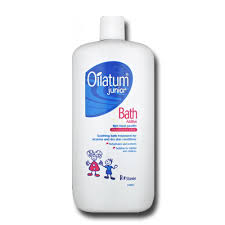
Soap substitutes and bath emollients are very useful to clean and moisturize skin prone to eczema. I use bath emollients like Hydromol/ Oilatum bath emollient or oatmeal powder to add to her bath water to provide additional moisture to her skin.

Based mostly on the experiences of other parents across the world (through their blogs and other interactions over the years) I completely avoid bath and skincare products which have Sulphates in them and Sodium lauryl sulphate (SLS) in particular.  Some studies have shown that Sulphates and SLS in particular can damage the skin barrier in people with healthy skin as well. (Source: http://www.eczema.org/aqeoushttp://www.ncbi.nlm.nih.gov/pubmed/14728695)

SLS is a synthetic detergent (cleaning agent) and surfactant (which means it makes bubbles). It is used in industrial products such as car wash soap, engine degreasers and floor cleaners. But it is also used in a wide range of personal care products such as soaps, shampoos and toothpastes to create lather.  While it is known to irritate skin when it comes into contact with products which have high doses of SLS, it can also damage skin of children with Atopic Dermatits. Usually, regular baby bath products contain Sodium Laureth Sulphate (SLES) which is gentler than SLS and is used to produce foam.

Last year when Aiyana’s skin condition was not improving at all was the time I decided to cut out this group altogether. I found options like Calfornia Baby products which are not only free of SLS and SLES but are also free of preservatives like Parabens. Instead they use coconut derived amino acids in their lotions which act as preservatives but are actually antioxidants; gluconolactone (corn) (and) sodium benzoate, an approved preservative for organic products in their shampoos and body washes. I am sure there are other such products which are equally gentle on the skin but as of now I am sticking to this range since I really do not want to take any chances with her skin care. It has proven to be gentle enough to be used even when her skin was not in a very good condition.

Oilatum Bath Additive Oil

Oilatum Bath Additive Oil

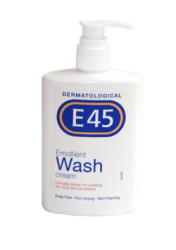
There are other less expensive options which I have used for Aiyana like Aveeno bath products (for e.g. Aveeno Skin Relief Body Wash); Oilatum bath emollientHydromol bath emollient and E45 cream and emollient. These have also worked well for her in the past and I still use a few of them (like Oilatum and E45) off and on both my children depending on their availability and skin condition. The paraffin based bath oils and creamy washes are good options in the summer months in a humid climate in our country. I have used the ointment form for cleansing (Epaderm and Hydromol ointments which are emollients and cleansers- all in one) a few times for my daughter when her skin had become extremely dry during the winter months. But I suppose for most children the bath oils and creamy washes should do the trick.

Products

  • Aveeno body wash is an oat based creamy wash;
  • Hydromol bath and shower emollient and Oilatum bath additive emollients are both liquid paraffin based bath oils (they also have cream based washes)
  • E45 has a cream wash and an emollient bath oil which work as a cleanser; Epaderm is in the form of a 3 in 1 emollient, bath additive and skin cleanser in ointment form
  • There are also other bath additives and creamy cleansers from Cetaphil, QV, Eucerin, Neosporin Ecema Essentials amongs others

    Epaderm 3 in 1 ointment

Availability

  • Aveeno products are usually available in Mumbai based stores like Just Moms (Breach Candy), Green Bell (Juhu), Amarsons. They can also be bought online from amazon.co.uk or amazom.com and a few sellers do ship them to India
  • Oilatum is readily available in most big chemist shops
  • Cetaphil, Eucerin and E45 are sometimes available in the same shops I have mentioned above
  • Hydromol and Epaderm is available in the UK and I buy online from amazon.co.uk or request my friends to get it for me
  • QV and other brands like Neosporin are available in the US and can be bought online through amazon.com but are not shipped by all sellers ( I am trying to figure out a way to get Neosporin Eczema Essentials Products for Aiyana since they are being recommended by quite a few parents)

E45 wash cream

Moisturizing routine

Emollients are found in various forms like creams, lotions and oils and are essentially used to moisturize dry skin.  I have already mentioned in details the moisturizing routine in my earlier post “Moisturizers and Eczema”. There are many products from brands like Exomega, Cetaphil, Avene, Hope’s Relief Cream. I have tried various products at different points in time depending on her skin condition and availability.

But the most important thing is to quickly seal in the moisture after bath while the skin is still moist after being patted dry.  Also, when the weather is hot and moist (mostly the case in Mumbai), I go lighter, meaning I use creams and lotions (if it’s very hot and humid lotions work well during the day); when it’s cool and dry I go heavier, meaning I use ointments or creams to provide better moisturization for my daughter.

I hope this article helps in giving you some basic pointers on the skin care routine that is so necessary for children (or even adults) with eczema to keep their skin healthy and their lives as normal and comfortable as possible. Please feel free to share your experiences and write to me with your questions if any! 

When the going (eczema) gets tough…..(part 1)

IMG_0414

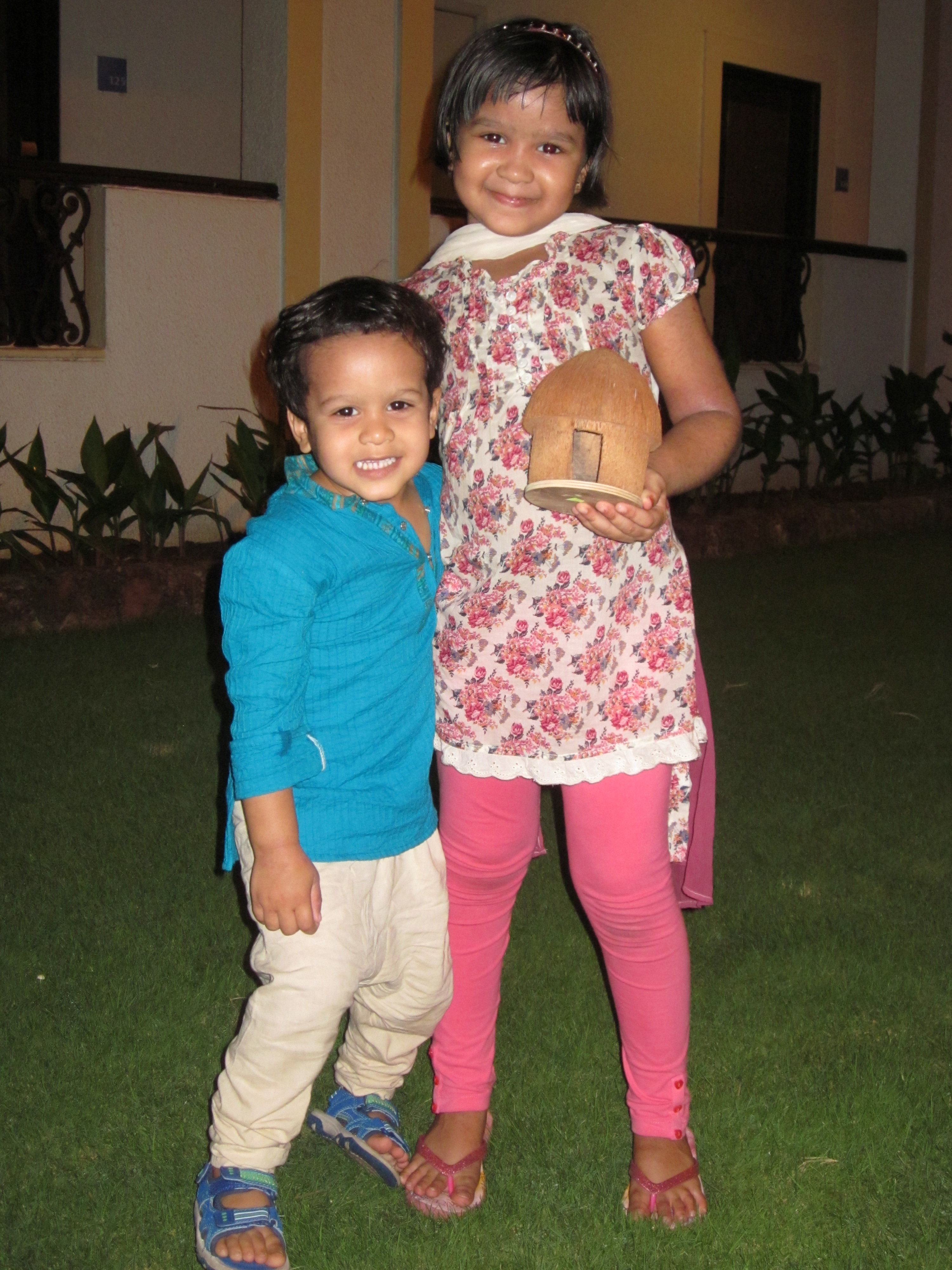
Aiyana and Shaunak in Goa

After Aiyana’s (and our) experience with Erythroderma in September 2012 we decided to take a much needed vacation. We ( Sudip and I, my mother and the kids) went for a one week holiday to Goa during the children’s Diwali break in November 2012. Goa is a small state in India on the Western coastline known as the Konkan region and is famed for its silvery beaches and is visited by tourists from all over the world. While we had a good time overall, her skin condition was just kept under control with oral steroids and immunosuppressants. Due to this reason, as a family we had decided to keep her away and stay away from the sea water and the swimming pool (the chlorine in the water tends to irritate sensitive skin).

Also, since Aiyana had been kept on a gluten free diet after her Ige ( blood allergy test) test had come positive to wheat allergen, it did pose some challenges as far as the food was concerned.  In order to manage her dietary restrictions, I had figured out the alternative food choices and some good gluten free products like Orgran and Bob’s Mill which are available in Mumbai (I wil be writing more on this in a separate post) . The hotel that we were staying in were also extremely helpful in catering to our special dietary needs and used to make us special gluten free parathas/rotis etc from the mix that I had taken with me. Overall I think we managed pretty well considering that in India dietary needs like gluten free/nut free/diabetic/allergy specific diets are not usually catered to in most places yet due to various reasons. As far as gluten allergy (foods containing gluten includes wheat or atta, maida, barley, malt, semolina or sooji) is concerned, it is quite uncommon in India and most people are not well versed with the specifics of this diet.

Under the influence of oral steroids (which we had started tapering) and after introducing an immunosuppressant (Cyclosporin)in September, her skin was much better overall. Itching however never completely went away.  The drug dosage was increased very slowly to the optimum level (depending on her weight) since the doctors did not want to take a chance with any adverse  reaction. With a powerful drug like Cyclosporin, it is imperative to monitor the effects ( increased blood pressure and reduced kidney function amongst others) of the drug on a regular basis. Hence, weekly blood tests were carried out initially after which it was carried out fortnightly and then monthly towards the end. I don’t know which was more traumatic for Aiyana, the skin condition or the blood tests.. This constant monitoring which is required made it difficult for Aiyana to go through with this treatment, but there was no option as such.

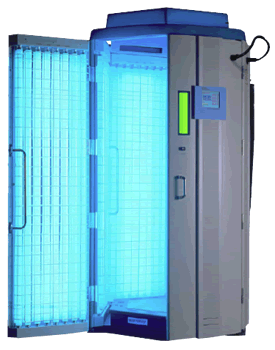
After consulting a Mumbai based senior pediatric dermatologist, we also started narrow band UV (ultra violet) treatment or phototherapy for her in November 2012. It is a type of treatment for adults and children with moderate to severe atopic dermatitis (also used for psoriasis) who have not responded well to other eczema treatments. Exposing the skin to UV light suppresses overactive skin immune system cells that cause inflammation and hence can control itching and rashes. The benefits of using phototherapy are that these therapies often work when other eczema treatments have not, and if done properly in a controlled environment and under supervision they can actually have fewer side effects than many of the prescription medicines used for eczema. In Aiyana’s case, her doctors wanted to eventually stop all oral medications and control her eczema with the help of narrow band UV therapy only.

Narrow band UV booth used for phototherapy

Narrow band UV booth used for phototherapy

So, while Phototherapy treatment continued, oral steroids was stopped completely in December 2012 and Cyclosporin (immunosuppressant) was stopped in February 2013. Her skin was overall in a good condition till the time that these medications were being given to her. Phototherapy treatment,  which had been started earlier was then continued as the solo treatment for her till April 2013. Phototherapy as a treatment did not prove to be very effective for Aiyana and her skin condition started relapsing  once again in April and within a few days became extremely dry, scaly and itchy. No amount of topical applications and moisturizers helped to control the same and Aiyana had to be once again put on oral steroids from mid April to stop it from deteriorating any further.

The good thing was that we had already planned for and arranged a trip end of April to meet a well known pediatric dermatologist in Great Ormond Street Hospital for Children and a pediatric allergy specialist in London. We came back to India and started her new medication at the end of May 2013 (I will write about our experience in Part 2 of  this post a lot happened after we came back and it might be an important lesson for parents using immunosuppressant for their child ) .While the results were not exactly what we had hoped for it did clear up some doubts as far as her allergies were concerned. The pediatric allergy specialist did a much more accurate (and painless) scratch test and patch test for her allergies and we were then able to include most of the foods back in her diet barring tree nuts (walnuts, hazelnut, peanut etc).

However, things were to become much worse for us before we got it back under control. There are so many things I wish I could have done differently for her if only I had known what was about to happen. But that is only wishful thinking on my part since it is only in hindsight that we have the perfect vision!

But what I do know is that we all do what we can for our children and that I will never give up finding the best possible treatments and course of action for my daughter. She is such a brave little girl who needs all my love, strength and support to see her through this difficult phase in life.

Moisturizers and eczema


Our long-term relationship with moisturizers

Moisturizing is a critical element in the treatment of eczema. They are found in the form creams, ointments and lotions.

Creams  contain a mixture of fat and water and feel light and cool to the skin. I have used them on my daughter during the hot summer months and during the day in the winter months.

Ointments are very thick and can be very greasy but they are very effective at holding water in the skin and hence are useful for very dry and thickened skin. I use these for Aiyana at night and as a soap substitute while bathing during the dry season.

Lotions contain more water and less fat than creams and can be used for moisturizing the skin in case of mild dryness.

All of the above may be suitable to be used at various points in time depending on whether a person’s eczema reacts to a specific ingredient or ingredients in an emollient, the humidity and the severity of eczema. Also for eczema (especially in case of children) such moisturizers necessarily have to be non cosmetic  and fragrance free since products containing alcohol, perfumes, lanolin, or preservatives tend to cause eczema breakouts.

Ever since we realised that Aiyana has eczema, I have been looking for the most suitable moisturizer for her. In this regard I have noticed that there is no one ideal moisturizer which has suited her at all times. I have changed her moisturizer brands over the years due to various reasons but I am always looking for a better one for her. I have used a type of cream on her earlier known as aqueous cream which is now believed to be more harmful than beneficial due to its sulphate content. In any case we noticed her skin did not get moisturized properly and I stopped using it more than a year back. (Source: http://www.eczema.org/aqueous)

Thus I have used quite a few products on my daughter, some of which are available in India and others are not. These have been recommended not only by her doctors but also by other parents across the world in their blogs and websites. Maybe you will find one here which will work better for your child as well.

HydromolOver the past few years I have used moisturizer brands like E45 cream, Exomega, Epaderm, Oilatum, Aveeno, Eucerin, California Baby, Mustela, Cetaphil, Burt’s Bees and Pure Potions at various points in  time. All these brands are not available here in India as of now. It can be very confusing to know which cream is suitable for your child and even I have learned through trial and error.

Although I have tried all the creams that I have mentioned, the ones which I found to have a creamier consistency ( these have seemed to work well with Aiyana) are the oat based ones like Aveeno and Exomega cream. I have used both of these interchangeably depending on their availability in Mumbai. But I had to shift from oat based moisturizers to others since she tested positive to the oat allergen last June in the IgE blood allergy test.

Another moisturizer which worked well for her last year is the ubiquitous coconut oil. In fact, when she had developed Erythroderma, we had used coconut oil (Parachute brand suited her better than the organic one) since her skin used to burn if we used any creams at all. It worked well as a moisturizer overall and seemed to really soothe her skin. But it was not as effective during the dry months. Also, Pure Potions amongst the ones I have mentioned has a “skin salvation” ointment which is a thick cream and supposed to have restorative properties and has helped Aiyana to some extent.

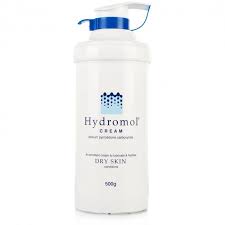
Currently I am using Hydromol cream on her(I switch to Hydromol ointment during the dry months) which seems to suit her skin and is effective in keeping her skin just moist. I had started using Hydromol Ointment on Aiyana in the dry months (December 2012 onwards) based on a UK-based doctor’s recommendation. I wanted to change her moisturizers to sulphate and paraben free creams (more on this in a separate post) and hence the change. And I have stuck to this brand ever since as it suits her skin. Amongst the other brands of creams, skincare and bath products (bath wash, shampoo, bath emollient) that have worked for her and have been highly recommended by other parents are the organic, sulphate and paraben free ones like California Baby (US), Burt’s Bees (US) and Pure Potions (UK). But these are on the expensive side as compared to the other brands and I have used these sparingly from time to time.

The other relatively less expensive mosisturizing bath products I have used in the past which I have found to be good for her are the fragrance free washes and shower/bath emollients from Aveeno, Oilatum and E45 out of which Oilatum is readily available in India. Currently I use California Baby bath products extensively for both my children since I have found them to be very gentle on their skin, especially for my daughter. ( I will elaborate on her skin care routine and her bath routine separately).  California Baby wash

Availability

  • Hydromol range is a UK based brand and is available online at amazon.co.UK through a seller-Mistry’s Pharmacy (all the sellers do not ship to India) as well as all the BOOTS pharmacies in UK.
  • Exomega range of products by Aderma, Cetaphil, Oilatum are available in big pharmacies in Mumbai like Rakhangi Medical( Worli), Asian Chemist (Bandra West) , Sterling Chemist (Pedder Road) amongst others as well as stores like Just Moms (Breach Candy), Green Bell (Juhu) and Amarsons.
  • Other brands like Mustela, Aveeno, Eucerin, California Baby, E45 and Burt’s Bees products are available in stores like Just Moms (in Breach Candy), Green Bell (Juhu) and to some extent Amarsons.
  • Pure Potions and Epaderm range are available on Amazon.co.uk as well as some other websites but may not be shipped to India.

I have tried to highlight as many options as possible keeping in mind different budgets. I have also compiled a list of the brands that we have used and their availability in Mumbai…I hope this helps incase you do decide to try any of these for your child. I would love to hear from you about what has worked for your child. Also, please feel free to ask me for any clarifications or any further information.

Our struggle with eczema intensifies

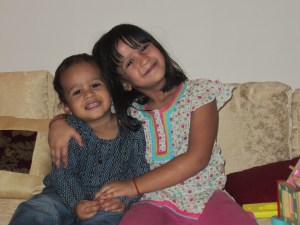
Aiyana with her brother Shaunak in 2011

Aiyana with her brother Shaunak in 2011

It was in October 2011 that we made a trip to Rajasthan for a religious function. For those who are unfamiliar with Indian geography, Rajasthan is a northern state in India with a very dry climate. Aiyana’s skin condition became extremely dry and started cracking even though we were there only for a few days. We came back to Mumbai and started topical medication in adition to moisturizers. We went through the whole gamut of moisturizers including creams and ointments apart from topical steroid creams of all strengths. We also tried out other treatments such as “wet wrapping” in the dry months of December 2011/January 2012 but nothing made her eczema go away completely. For some reason her eczema switch got triggered on and never switched off completely after October.

In June of 2012, Aiyana’s skin condition became very dry inspite of taking utmost care in moisturizing her thoroughly several times daily. We also did an allergy IgE test  (immunoglobulin E) where the blood sample is taken and then mixed with the allergen to see if there is a reaction. As we had expected, she tested positive to a whole host of  allergens like  dust mites, house dust, nuts and but also surprisingly to wheat as well. I did not want to take any chances in the light of the allergy test and with the doctor’s approval put her on a gluten free diet from June onwards. She did not show any immediate improvement with this diet but I still persisted for some more time hoping that her skin condition would improve eventually. It did not.

In the meantime, her itching and subsequently her skin condition became progressively worse. I tried various types of ointments, the highest strenght of topical cortisteroids and intensified her mositurizing routine as well but to no avail. Nothing worked and we reached a point where she was awake throughout the night and her skin started scaling and falling on the bed like black dust due to her constant itching. I can not tell you how painful it was for us to see her go through this agony of non stop itching and hence no sleep for about 10 consecutive nights. Still my husband (Sudip) and I were hoping against hope to see if we could somehow avoid giving her oral steroids and manage with topical applications only. In August 2012, she stopped going to school and we started sitting up with her all night trying to distract her with various activities like drawing, watching movies; anything really to make her stop itching. Her dermatologist and another pediatric dermatologist whom we had consulted, both informed us that if we did not start her on oral steroids soon, she would have to be hospitalized. She had now developed a skin condition called Erythroderma. Ertythroderma is the widespread reddening of the skin due to inflammation of the skin and precedes or is associated with exfoliation (skin peeling off in scales or layers). She was started on oral steroids (Prednisolone) in August 2012 at a high dose (according to her weight) and her skin cleared up within 48 hours! All I could think of was if only we had given her the oral steroids earlier on and spared her all this agony. Aiyana’s skin condition remained in good condition while she was on oral steroids and she was subsequently prescribed immunosuppressants (Cyclosporin) in September 2012 as oral steroids was just a short term medication to control her Erythroderma.

I can only tell you from our experience is that sometimes it is necessary to give oral steroids or some such powerful drug to your child. However, it has to be prescribed by the right doctor, at the right dosage and monitored correctly and regularly at all times. It is thus very important to see the right specialist from the beginning and to stick to one you can trust. It is very tempting to switch doctors and/or medication based on friend’s and family’s recommendations but it may not be the best thing for your child. I have come to realise this over the years of dealing with doctors, family, well wishers who have all tried to help my daughter. I know that I have to stick to her set of doctors who have been with us through all these difficult times and hence know Aiyana so well. They have also done much more for us than just handing us a prescription. Sudip and I have of course taken the opinion of other specialists as and when required. Ultimately, only you as a parent are the best advocate for your child in this fight against eczema.

Our first encounter with Atopic Dermatitis in 2007

Anindita's avatarEczema- an Indian perspective

My daughter, Aiyana was a chubby 1 year old child when we first realised that her skin was not exactly what is called “baby soft” that we usually read or hear about. Her baby skin was  quite rough in texture that somehow never quite felt smooth to touch. This was the first time we had heard of  this skin condition  which is called Atopic Dermatitis (or Eczema as it is commonly known)since till then we were not aware of this skin condition.

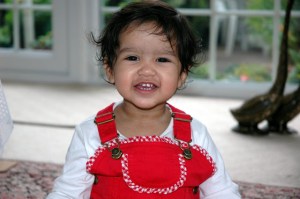
Aiyana when she was 1 year old

We also came to know that certain foods tend to trigger inflammation of skin for children with eczema. Through trial and error  we came to know that our daughter was allergic to eggs, dairy and though we did not give her any tree nuts (hazelnut, walnut, peanut, cashew etc) we avoided all of these all the same. This dietary restriction did help in alleviating her skin texture…

View original post 109 more words

Some basic truths about Eczema

I have realised over the years while dealing with my daughter’s eczema that there are a lot of misconceptions and also lack of awareness about this condition in our society. Unlike in Western countries where it is very common, here in India, it is not. This leads to a lot of questions, doubts, stares and occasionally not so kind comments which we have faced as a family and my daughter has had to face on her own as well. I would like to highlight some basic facts about Atopic Dermatitis (which is one of the different types of eczema).

  • Eczema is essentially a very dry skin condition where the skin lacks the protective barrier which is critical for retaining moisture and keeping out irritants, germs and other foreign substances. Atopic Dermatitis is a type of eczema which is quite common. It usually begins in infancy or childhood but can strike people at any age. It is also a highly individual condition and varies from person to person. The skin condition is usually very dry and can be scaly, itchy, inflamed in mild cases and crusting, bleeding and oozing in severe cases.
  • Non contagious– Atopic Dermatitis is not contagious and affects only the person with this skin condition. This cannot be spread to another person through touch or in any other manner. This is one of the key areas of ignorance as far as eczema is concerned in our country.

Source: http://www.uichildrens.org/

NFM-  natural moisturizing factor

Stratum corneum- portion of the outer layer of dead skin

Barrier lipid- natural skin oil and fat

  • Moisturize! Moisturize! Moisturize! For people with healthy skin the skin serves as a strong protective barrier against infection or irritation and the fats and oils (lipid barrier) in healthy skin help retain moisture. Effectively the skin cells act as bricks and the fats and oils act as cement that keeps everything together just like a seal. Thus, a critical part of the treatment of eczema is fortifying the protective barrier of the skin by first getting water absorbed by the outer layer of the skin and second to seal the water before it evaporates.  Sealing and retaining the water is done by using emollients ( moisturizers). I will be discussing this in further details in my subsquent articles.
  • Symptoms Some (but not all) of the common symptoms of eczema are as mentioned below–
  • Broken/dry/cracked skin
  • Many areas of the skin will be itchy and sometimes raw if scratched a lot
  • Some areas may become red, inflamed, develop blisters and ooze liquid
  • Scratching may result in thickened skin which usually returns to normal once scratching stops
  • Although these patches of dry skin may occur anywhere, in Atopic Dermatitis they are usually located on the neck, behind the knees, elbow joints, ankles, wrists, face, hands, feet, arms and upper chest.
  • Controlling eczemaPeople often ask me how I manage  Aiyana’s eczema. She has had eczema since she was 1 year old, so we have been dealing with it for about 6 years now.  There are some things that have worked for her and some that have not. The first line of treatment consists of emollients (moisturizers) which are used all the time and topical (applied directly onto the skin) cortisteroids or steroid creams as they are ususally known which are used on areas of the skin as required. When these measures fail to work the second line of treatment is prescribed which consists of antihistamines to control the itching; ultraviolet light therapy for children with severe eczema; immunosuppressants like closporine, azathioprine when other medications have failed; immunomodulators like Protopic and Elidel which are medicated creams to control inflamation and reduce immune system reactions and oral cortisteroids like prednisolone in extreme cases. We have had to apply both the first and second line of treatment for my daughter both of which I will discuss separately.
  • Others  Since we have been dealing with Aiyana’s eczema for some time now, I have been able to incorporate a few other steps that have helped other children by interacting with their parents both online and personally.
  • We have made some lifestyle changes like using mattress covers for all the beds in our house to prevent flare ups due to dust mites; changing from traditional detergent based laundry and dish washing cleaners to natural ones like reetha (soap nuts) and shikakai  etc. 
  •  Also we are very strict with her clothing which is always 100% cotton since sweating makes her itch 
  • We are always very careful about her food intake since some foods like nuts tend to aggravate her skin condition and bring about rashes
  • We have changed the heavy drapes in our house for light cotton curtains and have given gave away all her soft toys since both of these tend to collect a lot of dust This house dust is a major trigger for eczema in a lot of people.

These are some of the measures I have taken over the years to help my daughter live as normal a life as possible inspite of having eczema. I will be discussing these in greater details separately so that you do not have to carry out the kind of extensive search that I did to find out about these products and their availability in India.  I hope that through my experience with my daughter you will be able to help your child as well.

Our first encounter with Atopic Dermatitis in 2007

My daughter, Aiyana was a chubby 1 year old child when we first realised that her skin was not exactly what is called “baby soft” that we usually read or hear about. Her baby skin was  quite rough in texture that somehow never quite felt smooth to touch. This was the first time we had heard of  this skin condition  which is called Atopic Dermatitis (or Eczema as it is commonly known) since till then we were not aware of this skin condition.

Aiyana when she was 1 year old

We also came to know that certain foods tend to trigger inflammation of skin for children with eczema. Through trial and error  we came to know that our daughter was allergic to eggs, dairy and though we did not give her any tree nuts (hazelnut, walnut, peanut, cashew etc) we avoided all of these all the same. This dietary restriction did help in alleviating her skin texture but it never went away completely. We were able to manage to keep her eczema under control since it was still mild and responded well to local treatments and moisturizers.  And so we managed for about 4 years without any major skin related issues apart  from once in 2008.

All was under control till about a couple of years ago when her skin condition took a turn for the worse and it has not gone back to normal ever since. But through all our trials and tribulations and struggles with eczema our darling daughter who is now seven years old has shown amazing fortitude and her smile has rarely dimmed.

Go back

Your message has been sent

Warning
Warning
Warning
Warning

Warning.